
Tesla Charger Installation
Wall Connector or Mobile Connector setups with the breaker, wire size and mounting spot matched to how you park.
Got an EV and need a charger put in? Get a Level 2 installed, inspected and ready to charge overnight.
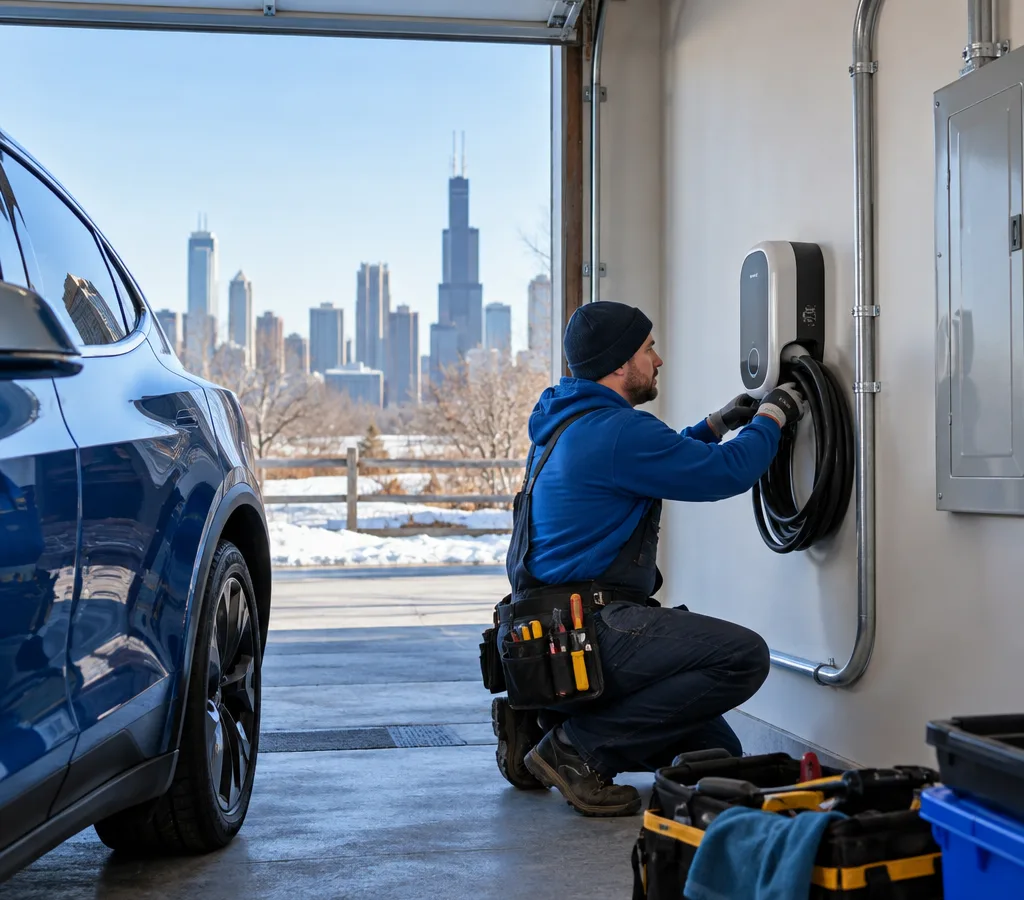
Good EV charger installation starts at the electrical panel, not the charger. We check your service size and what already runs on it, then size a dedicated circuit so a Level 2 charger can run for hours without tripping a breaker or overheating a connection.
From there we plan the run to where you actually park: a basement wall, an attached garage, or a detached garage off a Chicago alley. You get a written scope before any work starts, so the plan and the price are settled up front.
Still deciding between a garage wall unit and a driveway post? Our guide to garage and driveway charger setups walks through placement, cable reach and smart features.
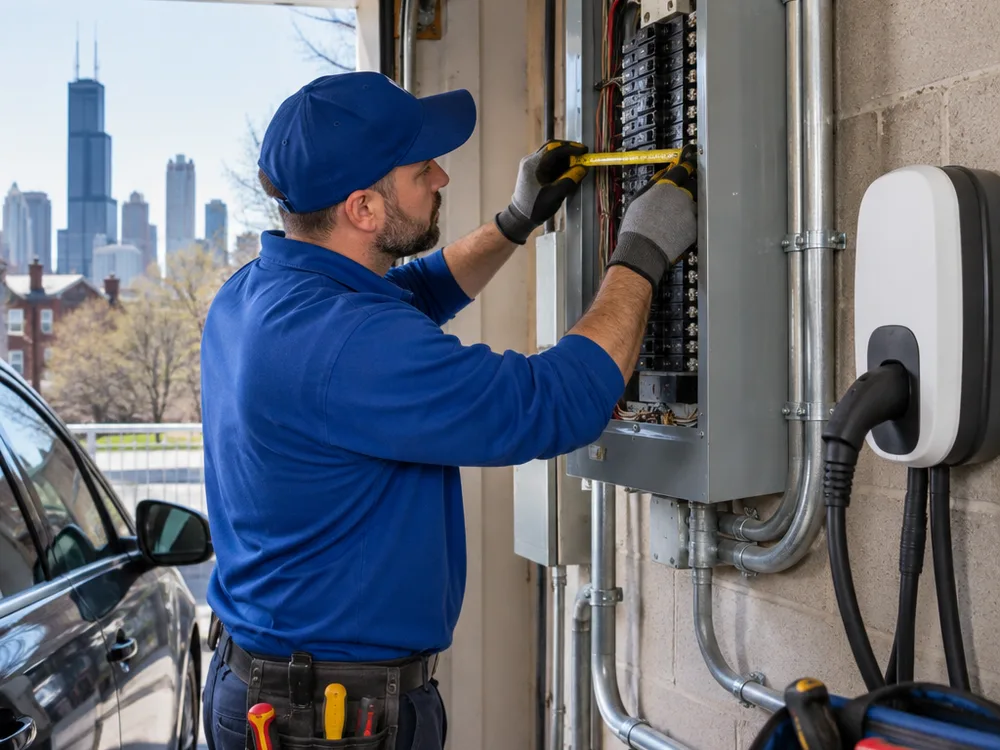
Wall Connector or Mobile Connector setups with the breaker, wire size and mounting spot matched to how you park.
When the panel is full or the service is too small, we lay out the options: load management, a subpanel or a service upgrade.
A 240-volt outlet on its own circuit for a plug-in charger or mobile connector, mounted where the cord reaches.
Charging in a deeded or assigned space, planned around your association's approval process and the building's electrical room.
Breaker trips, chargers that won't power on, scorched plugs and damaged cables, traced back to the cause.
Charging for a workplace, a retail lot or a multi-unit building is a different project. See commercial EV charging.
Housing here is old by national standards. Census estimates put the median home in Chicago at 1953 construction, and close to 39% of homes were built before 1940. Many still run on services sized long before anyone plugged in a car, so a load calculation comes before any charger recommendation.
The city's electrical code adds its own metallic conduit requirements, so a charger circuit is usually run in metal conduit rather than the plastic-sheathed cable allowed in many other places. That affects labor and how the finished run looks, which is why we plan the route before quoting.
Adding a circuit is electrical work that needs a permit before it starts, and the job is inspected afterward. We plan the schedule around that step so you know when you can start charging.
Most Level 2 installs we plan fall between about $600 and $2,500. A short run from a panel with room to spare sits at the low end; long runs, trenching to a detached garage, finished walls and panel work push it higher. A service upgrade is priced separately after the site visit.
Our breakdown of install costs covers each factor, and the ComEd EV charger rebate page explains the utility's rules and the federal tax credit that ended June 30, 2026.
Breaker trips when you charge? Get the circuit checked before it fails.
Call (773) 801-7276We look at your service size, open breaker spaces, existing loads and where the car parks, then map the shortest protected route.
You get the circuit size, wiring method, mounting spot and any panel work in writing before we schedule.
We run the circuit, mount the charger or outlet, label the breaker and line up the inspection the permit requires.
We power it up, confirm it charges at the expected rate and show you the breaker, settings and app basics.
We install chargers across Chicago and in nearby suburbs, including Chicago Heights, Chicago Ridge and West Chicago.
Not sure if we cover your street? Call (773) 801-7276 and we'll tell you right away.
Often, but it depends on your service size and what else runs at the same time. We do a load calculation first; if the numbers are tight, a lower-amp circuit or a load management device can avoid a full upgrade.
Yes. A new charger circuit is electrical work, and Chicago requires a permit before the work starts and an inspection afterward. We build that into the schedule.
Tesla Wall Connectors and most other Level 2 brands, hardwired or plug-in. If you plan to apply for a ComEd rebate, check the eligibility list first, because some models are excluded.
Most homes are done in one visit when the panel has room and the run is straightforward. Detached garages, finished ceilings and panel work can add time.
A standard 120-volt outlet works for Level 1 charging, but it adds only a few miles of range per hour. Most drivers who charge at home every day move to a 240-volt Level 2 circuit.
Tell us what you drive, where you park and where your panel is. We'll check capacity and plan your EV charger installation around it.