Eligible chargers
Level 2, smart, ENERGY STAR certified and safety-certified by a nationally recognized lab, bought on or after February 1, 2024. Enel X and JuiceBox units are excluded.
Counting on a utility rebate? Check ComEd's rules on chargers, installers and rate plans before you buy anything.
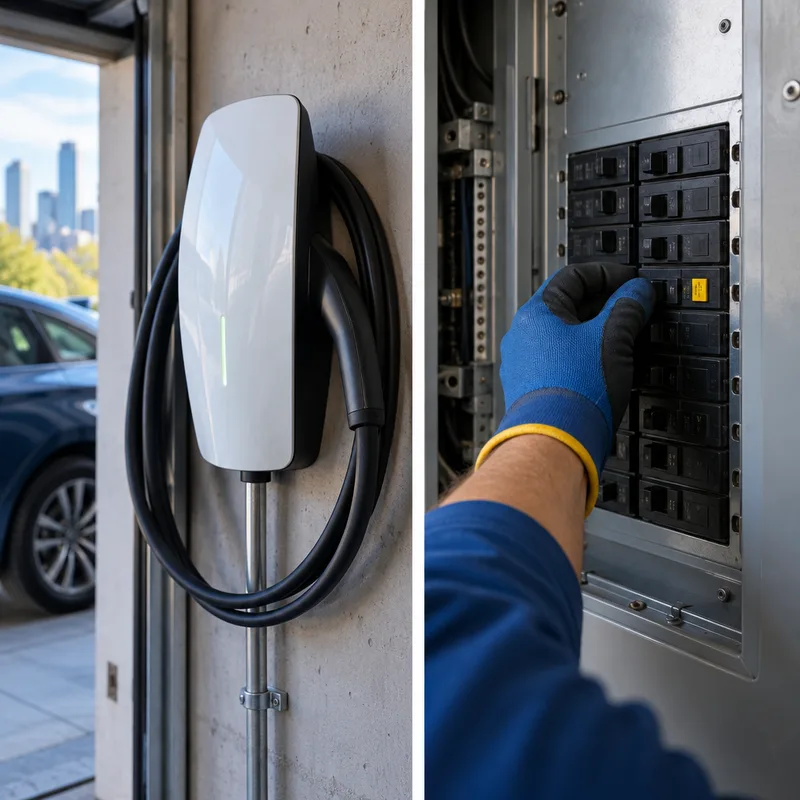
ComEd's residential EV charger and installation rebate helps pay for a Level 2 charger and its installation for customers in its northern Illinois service area, including Chicago. The program term runs from January 1, 2026 through December 31, 2028, with funding set each year.
The charger has to be installed and working before the application is submitted, and the application is filed by the installer, who has 90 days from the completed install to submit it.
ComEd EV charger rebate rules change from year to year, so check comed.com/EV for the current terms before you buy. Our Level 2 EV charger installers can walk you through what the rules mean for your install.
Under the 2026 terms, the base rebate was up to $1,000. Customers who are income-qualified or live in a Low Income Community or an Equity Investment Eligible Community could get up to $2,500. The rebate can't be more than the installation cost.
2026 funding filled quickly: base applications closed for the year, and income-qualified and equity-community applications had to be submitted by March 31, 2026. If you're planning an install in Chicago or the suburbs, check when the next round opens.
Level 2, smart, ENERGY STAR certified and safety-certified by a nationally recognized lab, bought on or after February 1, 2024. Enel X and JuiceBox units are excluded.
The install must be done by an EV Service Provider in ComEd's network. Self-installed chargers don't qualify, so ask any installer whether they're in the network before you book.
You must enroll in an eligible rate, such as Hourly Pricing, Delivery Time-of-Day or a time-variant supplier rate, for at least three years.
Power splitters, cord sets and adapters don't count toward the rebate.
The federal 30C credit for home charging equipment was eliminated by the One Big Beautiful Bill. It applied only to installs completed by June 30, 2026, so new installs no longer qualify.
That makes the ComEd EV charger rebate the main incentive for most Chicago homeowners. If cost is the deciding factor, our breakdown of install costs shows where the money goes.
Check ComEd's current terms. The program is aimed at Level 2 chargers installed at ComEd residential accounts, and the rules are updated each year.
No. Self-installed chargers aren't eligible; the install must be done by an EV Service Provider in ComEd's network.
Hourly and time-of-day rates encourage charging when demand is low. The rebate requires staying on an eligible rate for at least three years.
No. The 30C credit covered installs completed by June 30, 2026.
Tell us which charger you're considering and when you want it installed. We'll walk through what the current ComEd rules require.